How to measure shoulder bag strap drop before buying
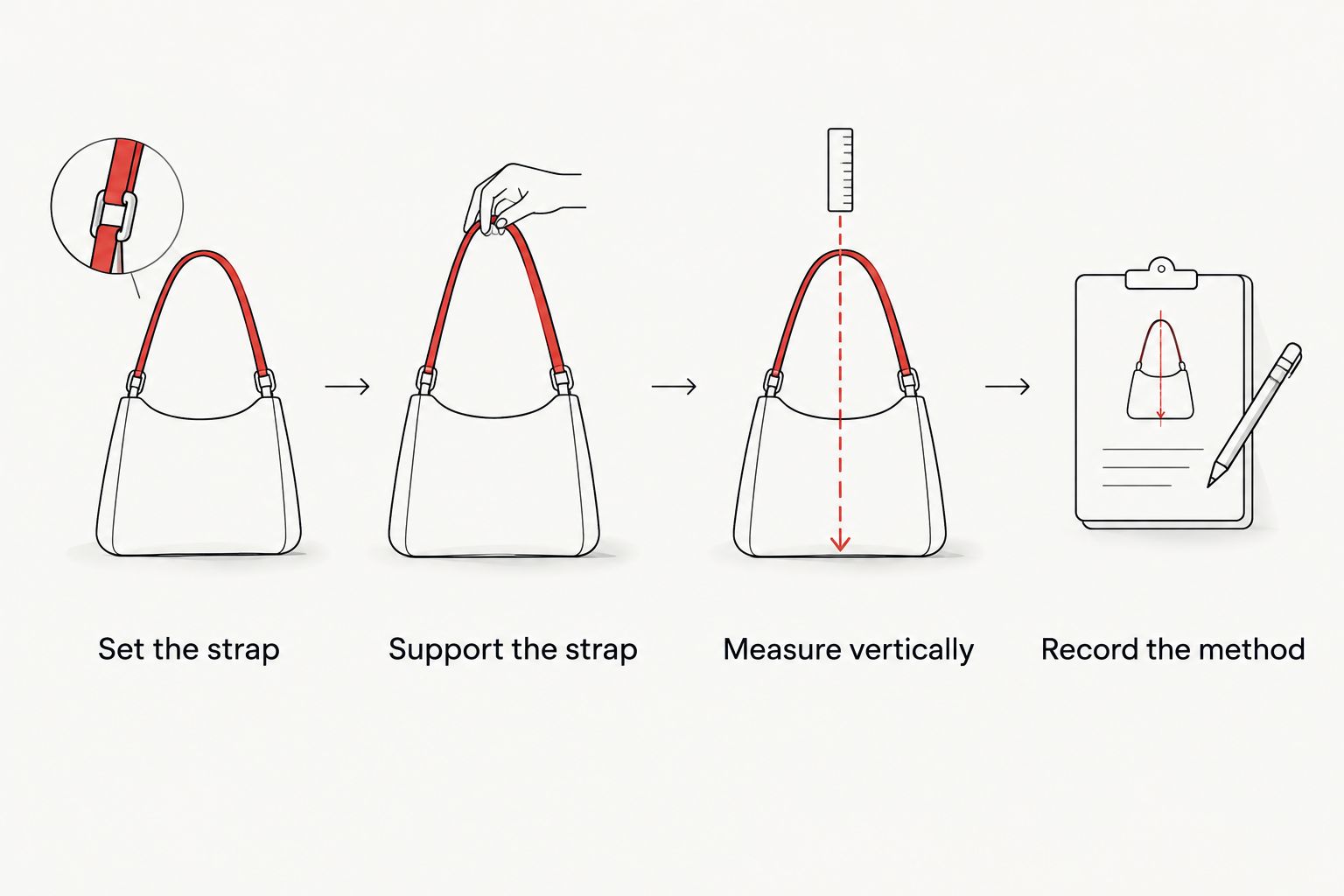
To measure strap drop for a small leather shoulder bag, lift the strap into its natural carrying position and measure straight down from its highest inside point to the top edge of the bag. Do not measure along the strap’s curve: that gives strap length, not drop. Before buying, compare the seller’s measurement method with a bag you already wear comfortably, then check the fit over your usual clothing.
- Measure small leather shoulder bag strap drop vertically, not along the strap’s curve.
- Noveltyhunts shoppers should compare strap drop, bag height, and opening clearance before choosing a shoulder bag.
- Use a comfortable existing bag as your fit reference, then repeat the check over outerwear.
- Ask whether the listed measurement includes attachment hardware and which adjustment setting it describes.
Why this matters
A bag can hold your essentials and still sit awkwardly under your arm. Strap drop helps you judge its position; bag height, width, and shape explain the rest.
When browsing Noveltyhunts, compare measurements rather than relying on how a bag sits in a styled photograph. A model’s outfit and posture do not tell you how the same bag will fit your shoulder.
For your 2026 bag shortlist, treat drop as a fit measurement, not a style label. The best starting point is a bag you already enjoy carrying.
How do you measure shoulder bag strap drop before buying?
Use a ruler or measuring tape, an existing bag, and the clothing you expect to wear. The goal is a straight vertical measurement with clear endpoints, followed by a separate wearing check.
- Set the strap. If it adjusts, choose the setting you actually use. Remove twists and make sure the attachment points sit naturally.
- Support the strap. Lift it at the point that rests on your shoulder. Let the bag hang without pulling the strap sideways or stretching it.
- Find the upper endpoint. Use the inside of the strap at its highest point, where your shoulder would support it.
- Find the lower endpoint. Identify the top edge of the bag body directly below. For a curved opening, note precisely where you finish measuring.
- Measure vertically. Hold the ruler straight down between those endpoints. Do not follow the strap’s outline or measure diagonally toward an attachment ring.
- Record the method. Write down the drop, strap setting, and lower endpoint. Those details make the measurement repeatable.
A seller’s diagram takes priority when interpreting that seller’s dimensions. If the diagram uses different endpoints, remeasure your reference bag the same way before comparing.
Which bag measurement are you looking at?
Product listings use several measurements that answer different questions. Keep them separate rather than treating every strap-related figure as interchangeable.
| Measurement | What it describes | Best for | What it does not establish |
|---|---|---|---|
| Strap drop | Vertical distance from the supported strap to the bag’s top edge | Estimating where the opening sits | Total strap length or complete wearing comfort |
| Strap length | Distance measured along the strap between stated endpoints | Comparing straps with matching measurement methods | Vertical drop without knowing the attachment geometry |
| Bag height | Distance from the bag’s top to its bottom | Estimating where the base will sit | Clearance between your arm and the opening |
| Bag depth | Front-to-back dimension of the bag body | Judging how much space the body occupies | Whether the strap fits your shoulder |
Do not substitute strap length for strap drop. A long curved strap and a straight vertical measurement describe different things.
How do you find your preferred drop with a bag you own?
Put on a bag that feels comfortable and notice where its opening sits. Then measure its drop using the method above. That gives you a personal reference without relying on a universal fit chart.
Repeat the wearing check with your normal contents inside. Loading changes how a soft bag hangs, so an empty-bag impression is not the whole decision.
Make a short fit note alongside the measurement:
- Does the opening sit clear of your underarm?
- Can you reach your phone without lifting the bag off your shoulder?
- Does the strap stay in place when you walk?
- Does the bag push your elbow away from your body?
- Can you put the bag on without squeezing your arm through?
If your existing bag fails one of these checks, do not copy its measurement uncritically. Record what you want to change: more opening clearance, a higher position, or less bulk beside your arm.
Your 2026 shopping notes should describe the desired fit as well as the dimensions. A number tells you where to start; the wearing check tells you whether that position works.
Fixed, adjustable, or detachable: which strap should you choose?
Choose the strap construction around how you intend to wear the bag. Adjustment offers more positions, but it does not replace checking the actual adjustment range and attachment design.
| Strap construction | Best for | Advantage | Limitation to check |
|---|---|---|---|
| Fixed strap | Shoppers who already know their preferred shoulder position | No adjustment setting to reset | The drop cannot be changed through a buckle or slider |
| Adjustable strap | Shoppers who want to change the carrying position | Lets you alter the fit within its stated range | The shortest or longest setting might still miss your preferred position |
| Detachable strap | Shoppers who want to remove a strap when the design allows | Separates the strap from the bag body | Detachable does not automatically mean adjustable or compatible with replacements |
For a fixed strap, measurement agreement matters especially: confirm the endpoints before comparing figures. For an adjustable strap, request the minimum and maximum drop rather than assuming a listed strap length supplies that information.
With a detachable strap, inspect the attachment system. Do not assume an unrelated replacement will fit the hardware or suit the bag’s intended load.
Why shoulder bag fit varies
The same recorded drop does not guarantee the same wearing experience. These physical differences explain why the measurement needs a fit check:
- Clothing thickness. A jacket occupies space between the strap, your shoulder, and the bag opening.
- Bag height. A taller body places the base farther below the opening, even when the strap drop matches.
- Bag depth. A deeper body takes up more room beside your torso and arm.
- Strap width and shape. These affect the contact area and how the strap sits on your shoulder.
- Attachment placement. The position of rings or tabs changes how the strap and bag body hang together.
- Body structure and contents. A flexible bag changes shape around its contents; a structured body holds its outline more consistently.
Avoid choosing a drop from height alone. Your shoulder shape, clothing, and preferred carrying position also belong in the decision.
How should you check the fit over a jacket?
Wear the outer layer you expect to use, then put on your reference bag normally. Walk, sit, reach forward, and take the bag off again. You are checking usable clearance, not just whether the strap goes over your shoulder.
Watch the opening as you move. If your arm presses it closed or catches the top edge, record that problem rather than simply describing the bag as too small.
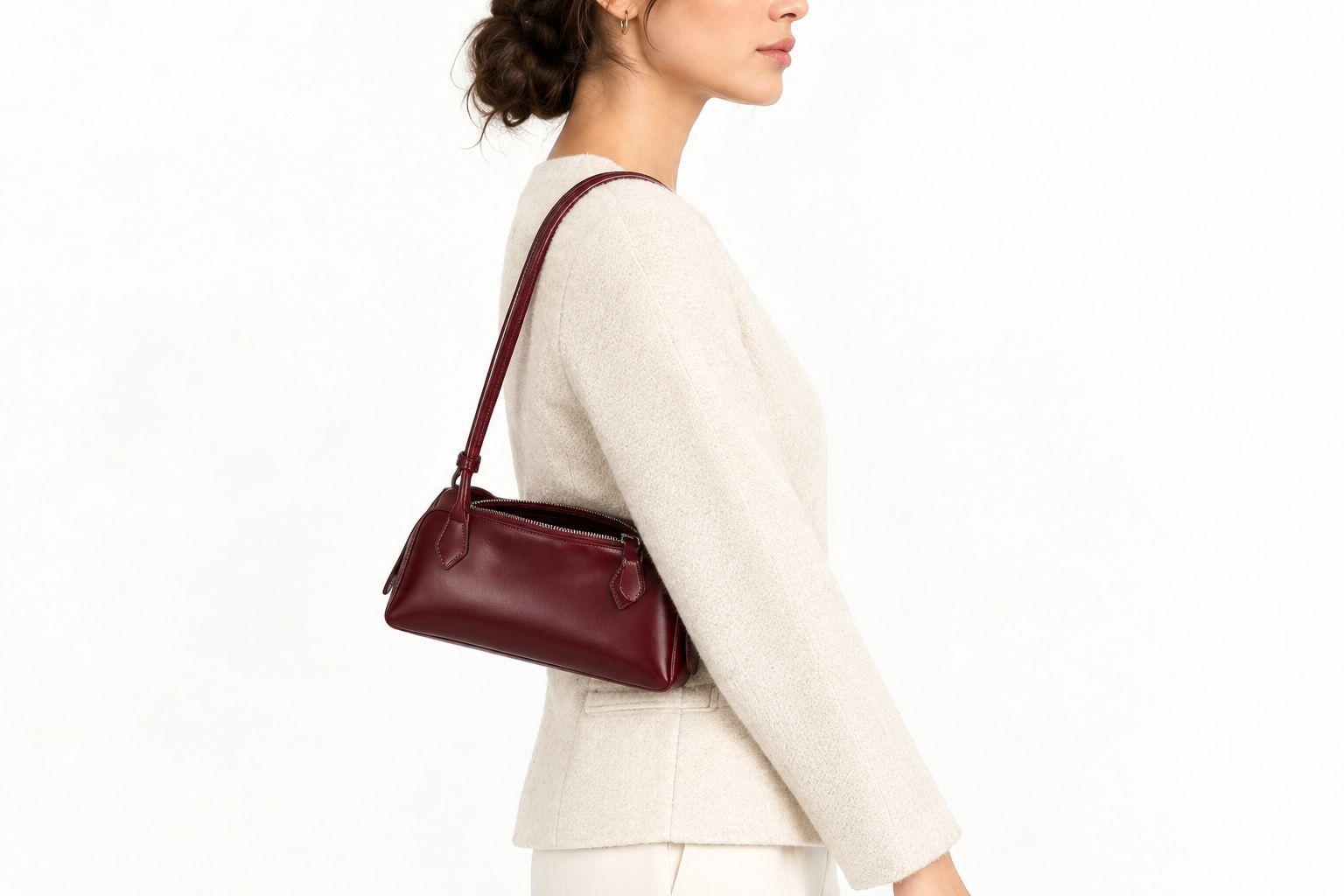
For a 2026 wardrobe refresh, test the layer you actually reach for, not an unusually thin substitute. If you wear the bag across seasons, record separate fit notes for lighter clothing and outerwear.
A strap that fits over your shoulder is not automatically comfortable under your arm. Check both before deciding.
Does your daily load suit a small shoulder bag?
Measure fit around what you carry, not around an empty display shape. Put your usual essentials into your reference bag and notice whether they crowd the opening, distort the body, or make retrieval awkward.
The distinction between a small shoulder bag and tote bags for daily use starts with the load: if you regularly carry bulky belongings, evaluate body capacity and access separately from strap drop. A longer drop does not make a compact bag body larger.
Keep the comparison practical. Your phone, wallet, keys, and other regular items should enter and leave without requiring you to unpack everything first.
For Noveltyhunts shoppers choosing a small leather shoulder bag, a comfortable existing bag is the best fit reference. Use its measurements as a baseline, but compare the new bag’s opening and body dimensions before treating the fit as equivalent.
If the compact shape suits dinner but not your daytime load, that is a use-case distinction rather than a measurement failure. Choose for the occasion you expect to repeat most often.
What should you ask when a listing only gives strap length?
Ask for the vertical strap drop and the measurement endpoints. A concise question is enough: request the distance from the inside top of the supported strap to the top edge of the bag body.
Then clarify the details that affect comparison:
- Adjustment setting: Does the stated drop describe the shortest, longest, or pictured position?
- Hardware: Does the strap-length figure include clips or attachment pieces?
- Top edge: Where does the measurement end on a curved or folded opening?
- Wearing position: Is the photographed strap arranged for shoulder wear or another carrying position?
Keep the reply with your 2026 shortlist. Otherwise, it is easy to compare a minimum measurement for one bag with a maximum measurement for another.
Do not halve a listed strap length and call the result its drop. That shortcut ignores the distance between attachments and the strap’s shape when supported.
How do you compare inches and centimeters accurately?
Use the same unit for every bag on your shortlist. 1 inch equals exactly 2.54 centimeters, so multiply inches by 2.54 to convert to centimeters; divide centimeters by 2.54 to convert to inches.
Also distinguish centimeters from millimeters: 1 centimeter equals 10 millimeters. Copy the unit alongside every measurement rather than relying on memory or a screenshot cropped too tightly.
Keep the seller’s original figure next to your conversion. Conversion makes units comparable; it does not correct different measuring methods or turn an approximate listing dimension into an exact fit promise.
What should you confirm before choosing a small leather shoulder bag?
Finish with a fit-and-material check rather than letting the silhouette make the whole decision. A bag can look right in an outfit and still lack the information you need to choose confidently.
- Drop: Compare matching endpoints and the relevant adjustment setting.
- Body dimensions: Check height and depth alongside the opening position.
- Material: Read the stated composition rather than assuming a leather-looking finish identifies the material.
- Access: Consider how the closure opens while the bag is on your shoulder.
- Policies: Read the current delivery and return terms before ordering.
Use this checklist when comparing Noveltyhunts options in 2026. It keeps the purchase centered on your routine without assuming that appearance proves material, fit, or quality.
Choose the bag whose measurements and construction support how you will carry it. Leave an unanswered fit question open until the seller clarifies it.
FAQ
How do I measure the strap drop on a small leather shoulder bag?
Measure vertically from the highest inside point of the supported strap to the top edge of the bag body. Record the strap setting and exact endpoints so you can compare like with like.
Is shoulder bag strap drop the same as strap length?
No, strap drop is a vertical measurement, while strap length follows the strap. You cannot compare them directly without knowing the strap’s shape and attachment positions.
What is the best shoulder bag strap drop for me?
Your best starting point is the measured drop of a bag you already carry comfortably. Check its position with your usual contents and clothing rather than choosing from height alone.
Should I measure my bag empty or full?
Record the strap drop with a consistent measurement setup, then assess wearing comfort with your usual contents inside. Contents affect how a flexible bag hangs and how easily you reach through the opening.
How do I know whether a shoulder bag will fit over my winter jacket?
Wear your usual jacket with a reference bag and check the opening, arm clearance, and ease of removal. Compare that bag’s drop and body dimensions with the candidate bag.
Can I divide strap length in half to find the drop?
No, dividing strap length in half does not establish vertical drop. The spacing between attachment points and the supported strap’s shape affect the measurement.
How do I convert a bag’s strap drop from inches to centimeters?
1 inch equals exactly 2.54 centimeters. Multiply the inch measurement by 2.54, and keep the original measurement beside the conversion.
One last thing
The measurement you forget to record is often the endpoint, not the number. A curved opening makes that detail especially important because different stopping points produce different results.
Take a photo of your reference bag with the ruler in place. Save it alongside your fit notes so your next comparison starts with the same method, not a fresh guess.